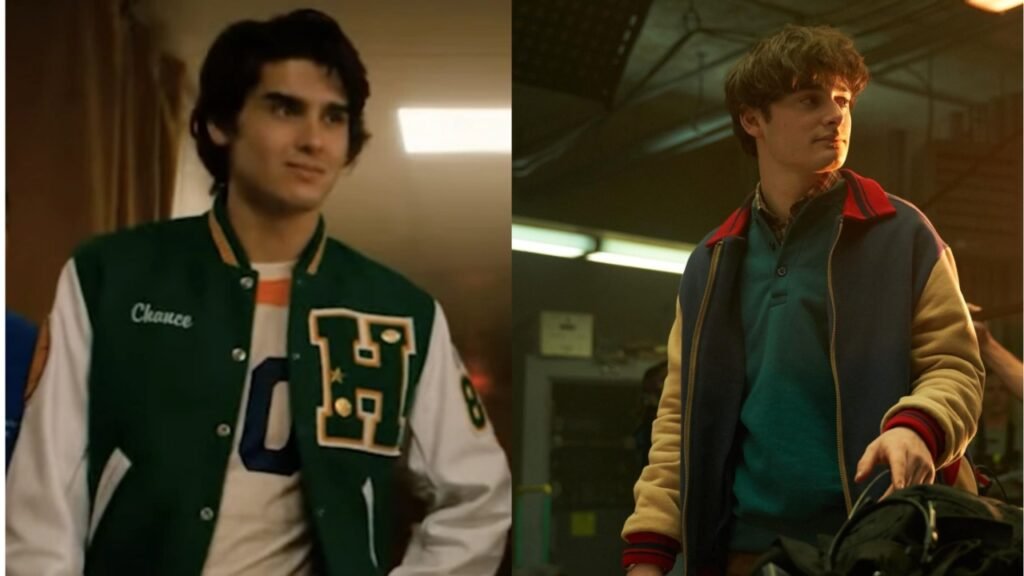
The magic of cinema often hinges on our collective willingness to suspend disbelief. We dive headfirst into fantastical worlds, accept impossible physics, and invest emotionally in characters who may or may not exist. Yet, sometimes, a subtle, real-world detail peeks through the carefully constructed illusion, sparking a curious double-take: the Real-World Context: Actors' Ages vs. Character Ages in Episode I, or any long-running series, for that matter. It's a fascinating phenomenon where the march of time for real-life performers clashes with the often more constrained timelines of their fictional counterparts.
While Star Wars: Episode I – The Phantom Menace presented its own distinct age-related casting choices (a very young Anakin, a slightly older Padmé), the dynamic tension between real-world aging and fictional timelines is perhaps nowhere more vividly illustrated than in long-form, episodic storytelling. Let's pull back the curtain on this intricate dance between reality and fiction, using a highly relevant and extensively documented case study to illuminate the broader principles at play.
At a Glance: The Age Game in Hollywood
- Time Warp: On screen, characters often age much slower (or faster) than the actors portraying them, especially in multi-season shows.
- Casting Choices: Older actors frequently play younger characters, and vice-versa, to meet creative, legal, or logistical demands.
- The "Child Actor" Challenge: Young performers grow rapidly, forcing shows to either accelerate character timelines, employ makeup tricks, or face increasingly noticeable age gaps.
- Impact on Story: These age differences can subtly (or overtly) influence audience perception, especially concerning character maturity or romantic pairings.
- Suspension of Disbelief: Ultimately, the success lies in the storytelling and performances, which persuade us to overlook these real-world discrepancies.
The Ageless Magic of the Screen (and Its Real-World Wrinkles)
Film and television operate on their own temporal rules. A story can span centuries in two hours, or unfold over a single week across multiple seasons. This elasticity is part of its power, allowing creators to compress, expand, and manipulate time to serve the narrative. However, actors exist in the real world, subject to its relentless progression. This creates an inevitable friction point: the contrast between an actor's actual age and the age of the character they embody.
Think about the initial casting choices for Star Wars: Episode I. Jake Lloyd, born in 1989, was around 9 years old when the film premiered in 1999, perfectly aligning with Anakin Skywalker's character age of 9. Natalie Portman, born in 1981, was 18, portraying a 14-year-old Padmé Amidala. This relatively small, four-year difference between actor and character for Padmé is common practice, but it's just the tip of the iceberg when we look at the broader landscape of age discrepancies.
The true test of this dynamic comes with prolonged productions. As seasons unfold or sequels are made, the actors continue to age, while their characters might remain frozen in a specific period, or age at a much slower, more controlled pace. This often necessitates creative solutions, from careful costuming and makeup to strategically written time jumps. But no matter the trick, the real-world context of an actor's age is a constant, fascinating undercurrent.
A Deep Dive Case Study: Stranger Things Unpacked
To truly understand the nuances of actors' ages versus character ages, we need a robust, real-world example. Stranger Things offers an unparalleled look into this phenomenon, particularly given its premise centered around a group of children growing up in the 1980s. The show masterfully manages a slow-burn narrative, yet the real world accelerates at its own pace for its young, rapidly growing cast.
Let's break down the Stranger Things timeline:
- Show Premiere: July 15, 2016 (Season 1)
- Season 1 Setting: November 1983
- Scheduled Stranger Things 5 Premiere: November 2025
- Season 5 Setting: Fall 1987
Within the show's narrative, only four years will have passed between Season 1 and Season 5 (1983 to 1987). Yet, in the real world, a staggering nine years will have elapsed between the 2016 premiere and the 2025 Stranger Things 5 premiere. This vast difference provides a perfect lens through which to examine the age disparity between performers and their roles.
The Young Guard: From Kids to Young Adults
The core group of children in Stranger Things has arguably presented the most compelling example of this age gap. Cast as pre-teens, these actors are now well into their twenties, while their characters remain teenagers.
- Finn Wolfhard (Mike Wheeler):
- Born: December 23, 2002
- 2016 Premiere Age: 13
- 2025 Premiere Age: 22 (will be 23 by the series finale)
- Character Age (Season 1): 12
- Character Age (Season 5): 16
- Discrepancy: Wolfhard is 9 years older than his character in Season 5. He was nearly the same age as his character in Season 1, showing how the gap widens over time.
- Millie Bobby Brown (Eleven):
- Born: February 19, 2004
- 2016 Premiere Age: 12
- 2025 Premiere Age: 21
- Character Age (Season 1): Approximately 12
- Character Age (Season 5): 16
- Discrepancy: By Season 5, Brown is 5 years older than Eleven. Her real-world journey has been equally transformative; for instance, you might be interested in details about Millie Bobby Brown's real-world milestones like her marriage and adoption announcement, which starkly contrast with Eleven's teenage narrative. It's a powerful reminder of the actors' lives evolving outside the Upside Down.
- Gaten Matarazzo (Dustin Henderson):
- Born: September 8, 2002
- 2016 Premiere Age: 13 (nearly 14)
- 2025 Premiere Age: 23
- Character Age (Season 1): 12
- Character Age (Season 5): 14 or 15 (estimated)
- Discrepancy: Matarazzo will be approximately 8-9 years older than Dustin in Season 5. His long-term relationship, noted in Matarazzo's long-term relationship, further highlights the maturity gap between actor and character.
- Caleb McLaughlin (Lucas Sinclair):
- Born: October 13, 2001
- 2016 Premiere Age: 14 (nearly 15)
- 2025 Premiere Age: 24
- Character Age (Season 1): 12
- Character Age (Season 5): 16
- Discrepancy: McLaughlin is the oldest of the younger cast and will be 8 years older than Lucas in Season 5. His more mature look for a 16-year-old character is a testament to the audience's willingness to accept the illusion.
- Noah Schnapp (Will Byers):
- Born: October 3, 2004
- 2016 Premiere Age: 11
- 2025 Premiere Age: 21
- Character Age (Season 1): 12
- Character Age (Season 5): 16
- Discrepancy: Schnapp, initially the youngest of the core group (and coincidentally the godfather to Millie Bobby Brown's adopted daughter), will be 5 years older than Will in Season 5. His character's narrative often keeps him in a more vulnerable, youthful state, making the actor's real-world maturity a more noticeable contrast.
- Sadie Sink (Max Mayfield):
- Born: April 16, 2002
- Joined Cast (Season 2, October 2017) Age: 15
- 2025 Premiere Age: 23
- Character Age (Season 2 debut): 13
- Character Age (Season 5): 16
- Discrepancy: Sink will be 7 years older than Max in Season 5. Her remarkable talent has propelled her to other significant roles, as seen with Sadie Sink's post-Stranger Things success, earning a Tony nomination, showcasing her growth beyond the confines of her character's age.
The "Teen" Adults: Navigating the Gap
The older teen characters in Stranger Things were initially portrayed by actors already past their character's ages, a common industry practice to avoid child labor laws and ensure actors can handle complex material.
- Joe Keery (Steve Harrington):
- Born: April 24, 1992
- 2016 Premiere Age: 24
- 2025 Premiere Age: 33
- Character Age (Season 1): Approximately 17
- Character Age (Season 5): 21
- Discrepancy: Keery will be 12 years older than Steve in Season 5. His ability to convincingly play an evolving character, from high school jock to "babysitter," despite the increasing age gap, is a testament to his performance.
- Natalia Dyer (Nancy Wheeler):
- Born: January 13, 1995
- 2016 Premiere Age: 21
- 2025 Premiere Age: 30
- Character Age (Season 1): 17
- Character Age (Season 5): 20
- Discrepancy: Dyer will be 10 years older than Nancy. The real-world dynamic between her and costar Charlie Heaton (Dyer and Heaton's real-world relationship) adds another layer to their onscreen chemistry, which transcends their characters' fictional ages.
- Charlie Heaton (Jonathan Byers):
- Born: February 4, 1994
- 2016 Premiere Age (Season 1): 22
- 2025 Premiere Age: 31
- Character Age (Season 1): 16
- Character Age (Season 5): 20
- Discrepancy: Heaton will be 11 years older than Jonathan. Despite having a son born in 2014, Heaton has successfully maintained the perception of a character still finding his way into adulthood.
- Maya Hawke (Robin Buckley):
- Born: July 8, 1998
- Joined Cast (Season 3) Age: 20
- 2025 Premiere Age: 27
- Character Age (Season 3 debut): Approximately 17
- Character Age (Season 5): 19
- Discrepancy: Hawke will be 8 years older than Robin in Season 5. As the youngest of the "older" cast members, her age gap, while significant, is still manageable for her character's relatively recent introduction. Her multifaceted career, as the daughter of Uma Thurman and Ethan Hawke and a musician, speaks to her broader talents.
The Scene Stealers: Younger Than You Think
Sometimes, actors are cast younger than expected, or their characters age dramatically, leading to a different kind of age gap.
- Priah Ferguson (Erica Sinclair):
- Born: October 1, 2006
- Joined Cast (Season 2) Age: 11
- 2025 Premiere Age: 19
- Character Age (Season 2 debut): Approximately 10
- Character Age (Season 5): 13
- Discrepancy: Ferguson will be 6 years older than Erica. Her character has arguably seen the most significant in-show age progression relative to her initial appearance, moving from a sassy child to a capable teenager in just a few seasons, mirroring her own rapid maturation.
Why the Discrepancy Matters (and Why It Doesn't)
The meticulous detail of these age comparisons might seem like nitpicking, but it reveals deeper truths about filmmaking, storytelling, and our engagement with fictional worlds.
The Creative License: Why the Gap Exists
- Talent Trumps Age: Directors prioritize finding the best actor for the role, regardless of whether their real age perfectly matches the character's. An older actor might bring more maturity and experience to a younger role, or a younger actor might capture the essence of a more naive character.
- Legalities and Logistics: Child labor laws are strict, limiting the hours young performers can work. Casting slightly older actors for teenage roles often simplifies production and ensures consistency.
- Franchise Longevity: For shows like Stranger Things, a successful formula means multiple seasons. Actors, particularly children, will inevitably age beyond their characters if the in-show timeline progresses slowly. Producers must weigh the realism of age against the desire for a consistent cast.
- Character Development: Sometimes, an age gap allows for greater depth. An actor might be older than their character, but their performance captures the character's emotional immaturity or arrested development, adding layers to the story.
Audience Perception & Suspension of Disbelief
For the most part, audiences are remarkably forgiving. We want to believe the story. If an actor's performance is compelling, we'll willingly overlook minor age discrepancies. However, when the gap becomes too vast, or when character arcs demand a visual adherence to age that's obviously absent, it can strain that suspension of disbelief. The success of Stranger Things in managing its rapidly aging cast lies in its strong writing, compelling performances, and the sheer affection viewers have for the characters.
The Practical Realities of Production
Consider the challenge of maintaining a cohesive visual narrative over nearly a decade. Sets, costumes, and makeup artists work tirelessly to keep characters looking consistent, even as the actors undergo real-world changes. This is a monumental task, highlighting the incredible effort behind the scenes to preserve the illusion.
The Episode I Connection: A Timeless Challenge
While our deep dive focused on Stranger Things, the Real-World Context: Actors' Ages vs. Character Ages in Episode I presents its own unique set of considerations. As mentioned, Natalie Portman, at 18, played a 14-year-old Queen Amidala. This isn't just about appearance; it subtly influences how audiences perceive character dynamics. For instance, questions surrounding How old is Padme in Episode 1 become more salient when juxtaposed with Anakin's youth, and the nascent romance hinted at in later films.
The contrast between the young Jake Lloyd and the slightly older Portman in Episode I laid groundwork for a relationship that would blossom years later. The initial age disparity, though not as dramatic as in Stranger Things, required the same careful consideration from filmmakers. They needed to cast someone who could convincingly portray a young monarch with gravitas, even if it meant a slight age difference between actor and character. This foundational decision in Episode I echoes the broader industry challenges we've explored, demonstrating that the age-old dilemma (pun intended) is a constant in cinema, regardless of genre or era.
Beyond the Numbers: The Actor's Craft
Ultimately, the burden of bridging the age gap often falls on the actors themselves. Their ability to regress or advance their performance, capturing the essence of a character at a different life stage, is a testament to their skill.
- Physicality: Actors might alter their posture, gait, or facial expressions to appear younger or older.
- Voice Work: Adjusting vocal pitch, tone, or cadence can significantly impact perceived age.
- Emotional Nuance: The most crucial aspect is conveying the character's emotional maturity, experience, or innocence, regardless of the actor's real age. A seasoned actor playing a teenager often focuses on embodying the character's immaturity and vulnerability, rather than simply trying to "look" young.
Navigating the Cinematic Time Warp
For viewers, understanding the Real-World Context: Actors' Ages vs. Character Ages offers a richer appreciation for the craft. It's not about criticizing an actor's appearance, but recognizing the challenges inherent in cinematic storytelling. For creators, it's a reminder of the delicate balance between artistic vision, practical limitations, and audience perception.
The ongoing journey of the Stranger Things cast beautifully encapsulates this challenge. From the fresh faces of young kids to the mature presence of young adults playing teenagers, the series demonstrates how compelling performances can overcome the most significant age disparities.
The Enduring Illusion
The truth is, we cherish the illusion. We love being transported, moved, and entertained by stories, even when we're subconsciously aware of the artifice. The Real-World Context: Actors' Ages vs. Character Ages in Episode I and beyond, is simply another layer of that fascinating artifice. It's a reminder that behind every compelling character is a dedicated human being, navigating their own timeline while helping us lose ourselves in another. It's a testament to the enduring power of storytelling, where the numbers often fade, and the magic remains.